Tuesday, 22 February 2011

Music Video Theory

Music Video General Theory
1. Lyrics establish the general mood of the video, where as the shots used are the implied meaning, which will either relate or contradict the lyrics, or use a vague concept related to the style of music.
2. Tempo of the music often dictates the rate of the editing.
3. Genre is frequently reflected in the types of mise-en-scene used, common themes, style of performance, use of the camera and the way in which it’s edited.
4. Depending on how the camera is used, will impact the connotations associated with the band. More often than not, close up’s will dominate the majority of the video.
5. Editing is generally done in fast successions, to try and make it difficult for the audience to grasp what is fully going on in the video, meaning they will have to watch the video multiple times.
6. Digital effects will be used to enhance the editing, to either add to style or the audience’s experience.
7. Intertextuality is often present. This is to create pleasure in the audience, as they will be able to connect to the video and feel a sense of fulfillment at the ability to pick up on the references. An example of this is Lady Gaga- Telephone that has clear references to Kill Bill through the scene in the diner and the car used, other references include Chicago as she is walking into the prison and the style of dancing used.
8. Exhibitionism is the exposure of some form of nudity, this is common in music videos, more often than not, they show some form a nudity,(even if it’s mild) to make the artist more desirable. Either through showing the female artist themselves, or male artists surrounded by half naked women to imply that if you buy into their image and style you will be like them. This stems from the Male Gaze Theory

Male Gaze Theory
Proposed by Laura Mulvey, a British feminist film theorist, who used Freud’s psychodynamic theory and applied it to cinema to use it as a psychoanalytic theory in the study of cinematic spectatorship. She claimed that women are seen as two types of women portrayed in cinema, either voyeuristic (sex objects) or fetishistic look (exaggerating a woman’s features). This is to make women as sex objects for either passive or active viewing, this means that women are either seen as a sexual in nature or actively there to give pleasure to males. Freud referred to this as scopophilia, which is to look at other people bodies in an erotic manner for pleasure.
This is especially seen in music videos; women are actively providing pleasure to men in the film through kissing or erotic dancing (which in turn provides pleasure to the audience), or as objects for men to stare at. A lot of the time the women are seen as the spectacle and men are the viewer.
This theory is proved particularly in what is classed as pop music videos, such as Katy Perry’s – California Girls. Here the women involved are seen in evocative clothes, and dance in a sexual nature, showing the women as sex objects.


Goodwin’s Theory
Andrew Goodwin stated that there are 7 key features in a music video, the majority of which will be included into a successful music video.
1. Visuals will either illustrate, amplify or contradict the lyrics and music
2. Different types of music will have their own style of music video, which is tailored to the type of music they produce.
3. No matter what type of music video close ups must be included.
4. The artist/band might want to develop their own star iconography, which becomes their signature image that the audience will be able to identify with automatically.
5. Voyeurism (someone watching someone else in a sexual nature, usually in secret, to gain some form of pleasurable experience) is often incorporated in the majority of music videos.
6. Inter-textual references are usually incorporated, usually in relation to the type of music produced and the audiences popular associations
7. Female artist or performers are often viewed as objects, and often the camera shots and angles used are to emphasis the star being treated in a sexual manner
This photo is an example of point 6: the car used in this music video is the same as the one used in Kill Bill Vol.1.

Monday, 21 February 2011

Types Of Music Video

Types Of Music Video

There are three main types of music video; performance, narrative and concept.

Performance based music videos, is where the majority of the footage is where the band or artist perform the song through playing the song in what appears to be a ‘live performance’. Performance based music videos occur in various genres but most consistently in rock or R’n’B. Both of these genres provide different types of performance videos. Often rock or indie videos are shot in more surreal locations, however the performance is very basic with the band just playing their instruments and singing the lyrics rather than moving around. It is more the use of the camera angles and shots that creates the movement. The large variety of shots and angles used, plus rapid cutting on editing is what creates the up tempo feel of the video to match the music.
R’n’B performance music videos often involve the artists dancing or moving around a lot, which is what creates the movement within the video The artist or group often actively perform their song through singing and dancing. The majority of the shots are mid shots or establishing shots while using pan to add to the movement already created by the artist. Editing in R’n’B music videos is more sustained compared to rock performance music videos.
Examples of these are: The Killers – Somebody Told Me
Beyoncè- Single Ladies


Narrative based music videos aim to tell the story the lyrics are describing In recent music videos it is rare that the video will be solely narrative as they are difficult to produce. One theorist concerned with narrative media forms is Tudor. He stated that there will always be 5 elements to narrative media forms; equilibrium, disequilibrium, recognition, reparation and new equilibrium. Equilibrium is when everything is alright for the characters involved, disequilibrium is when something goes wrong for the lead roles, recognition is realising what went wrong, reparation is where the lead character decides to fix what is wrong and the new equilibrium is resolution.
In relation to narrative music videos often the song will go through these 5 stages. An example of a narrative video is Nelly ft Kelly Rowland – Dilemma. The equilibrium is Nelly enjoying ‘Nellyville’ without any cares, disequilibrium and recognition is the introduction of Kelly Rowland, where Nelly realises he wants her but can’t have her, as she has a boyfriend; reparation is where Nelly goes after her anyway and the new equilibrium is they end up together anyway.
A good unusual narrative music video is Coldplay- The scientist. Instead of acting out the lyrics, they use the common line – “I’m going back to the start”, and have the whole of the video in reverse.

http://www.youtube.com/watch?v=bxNJHuM0Js0

Concept based videos take a simple idea or concept, which is usually unrelated to the song and then develop it. Often the music video is more dependent on mise-en-scene and camera angles then what actually happens on the screen. A lot of the time the aim of the concept music video is more about creating a style They do not necessarily have to make sense, but just need to have suitable mise-en-scene and style for either the concept or image they are trying to convey. They often use abstract metaphorical images with mild links to the song, allowing the audience to create their own interpretations.
One of my favourite concept music videos is White Lies- Bigger Than Us. The images seen are completely unrelated to the lyrics, however, as you listen and watch, there are distinct links to E.T, which is obviously an iconic film so many people are able to pick up on this. The lyrics ‘I just gotta get home, and I feel like I’m breaking up and I wanted to stay, all the lights on the hillside don’t take me this way.’ all have links with E.T.


Finally, a new music video has emerged as a result of  new technology available to the industry. It is called interactive music video. This is for online watchers and provides them with the ability to interact with what is going on in the video and change what the audience can see. Not only does it make increase the viewers attention span, but the artists who use this technique first are likely to bel more memorable, such as Professor Green and his music video; “Comin’ To Get Me.”

http://www.latenightwidget.co.uk/


However, more often than not music videos are not clear cut into one of these categories and will incorporate elements from more than one of these set categories. For instance, Bigger Than Us incorporates performance with concept. Most music videos will have some element of performance even it is not the band or artist singing they may have someone else singing the lyrics.

Tuesday, 1 February 2011

History of the Music Video


The music video is a very powerful medium which actively promotes not only a single or album, but also promotes the band or artist, enabling a connection to be established between the audience and the artists.
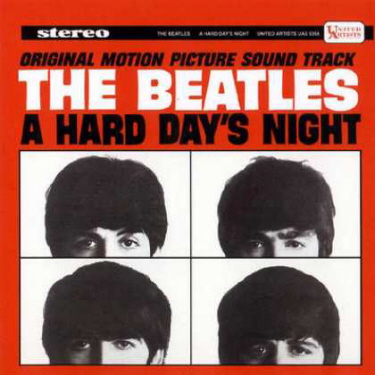
In 1964, one of the first and arguably one of the most notorious music videos of popular music was ‘The Beatles-A Hard Days Night’ directed by Richard Lester. Before the release of this short film the only types of music videos were of artists playing live music or were in a strict narrative form. This video was the first of its kind; instead of having the Beatles act out roles (which was what many artists did at this time) they just portrayed themselves, thereby actively promoting their image. In order to convey a sense of realism across to the audience a documentary style video was used. For example, rather than having high quality footage and obscure surroundings, Lester used black and white footage and everyday locations to give it a sense of realism. Due to the video being the first of its kind many people actually believed that the chase scenes were real. However, Lester did incorporate some comical slants throughout the film, promoting the Beatles as lighthearted slick young men to their target audience, which were young women, as the film suggests. The way young women were portrayed in the film was not dissimilar to how the fans acted in real life; how the fans acted is now referred to as Beatlemania. The film made a gross profit worldwide of $11 million and the song was number one in Britain for 21 straight weeks.


The next big event in the development of music videos was the introduction of MTV. The television show broadcast music videos to the audience’s homes, making it even easier for the artists to tap into their potential market. In the late 1980’s the introduction of the MTV Awards sparked further growth in the amount of music videos produced thereby actively promoting the bands appearing in the videos. MTV completely revolutionized the music industry and the way we class types of music. Stereotypical images were portrayed on MTV and these stereotypes became established genres such as the image of a rap artist. During the 1990’s MTV diversed its product offering with around 50% of its output being ‘reality’ television shows such as The Hills.

Then came YouTube. The release of YouTube enabled people to access and upload videos on to the internet, meaning that people could access music videos not only at home but wherever the internet is available. This easy accessibility meant that bands could promote themselves internationally. Now the majority of music videos are promoted via YouTube. Often these videos are posted on the artists website, so any fans that access their website will automatically be able to view their latest videos. However, this means that music videos have to be more compelling to watch from the first few seconds due to the amount of other videos that are accessible on the internet.

Documentary

Initially, I planned on doing a documentary based around the commercialisation of Christmas and other special occassions, and how the industry has used these events to make substantial profits. In some ways I consider the true message of these events has been lost.

I compiled the following letter which I sent to a number of supermarkets.


73 Weeping Cross
Stafford
ST17 0DQ
30/10/10
Dear Sir/Madam,
I am a Year 13 student at Walton High School currently studying A level Media Studies. As part of this course, I hope to create a documentary on a topic of my choice.
I would like to investigate how retail stores such as yours promote Christmas, how much time you spend preparing for Christmas and how much profit is made during this period in comparison to the rest of the year.
In order to acquire this information, I would be very grateful if a manager from your store would be available for a short interview and if possible, I would like to film shots down your seasonal aisles to show the effort that your store puts into promoting Christmas.
If it is not possible to have an interview, I would be very appreciative if I could still have permission to film your seasonal goods aisle.
Also, I would be very grateful if you could respond as quickly as possible as the filming deadline for this work is the end of November.
Please contact me either using the above address or using the email address below. I look forward to hearing from you.
Yours faithfully,
Hannah Victoria Fyfe.
Email Address; david.fyfe1@ntlworld.com


However, none of the supermarkets I sent the letter to responded. Also, I found it difficult working on my own, which made me change my mind and I decided it would be better to work on a music video